
What Wheel Concavity Actually Is (and When It Matters)
Concavity is the curve of the face, not the depth of the lip. Here's what creates it, what limits it, and what it costs you in brake clearance.
What concavity actually is
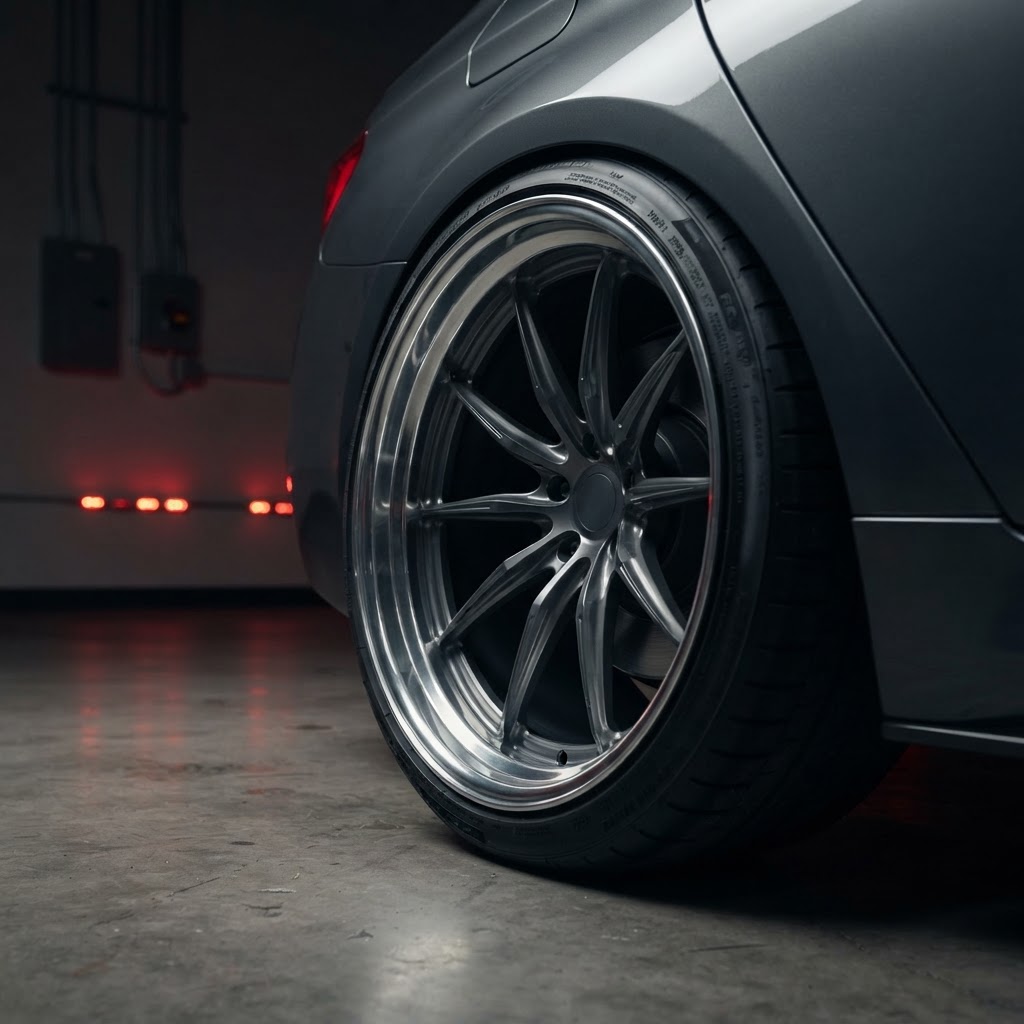
Concavity describes how far the spoke face sits behind the outer lip of the wheel. A flat wheel has spokes that run straight out to the rim edge. A concave wheel's spokes curve inward as they leave the hub, then sweep back out to meet the lip, so the centre of the wheel looks recessed and the lip looks deep.
It's worth separating two things people mix up. Concavity is the curve of the face. Lip depth is how much polished or machined lip sits outside the spoke. You can have a deep lip with a nearly flat face, and you can have a strongly concave face with a modest lip.
What creates it
Three things, and you only control two of them:
- Width. A wider wheel has more distance from hub to lip to work with.
- Offset. A lower offset pushes the mounting pad further inboard, which increases the gap between pad and lip, which is where concavity comes from.
- Brake clearance. This is the constraint. The spoke has to travel past the caliper. A heavily concave spoke drops inward quickly, which is exactly where a big caliper sits.
That's why the rear of a car can usually run more concavity than the front: more width, more offset, smaller brake constraint.
Does it make the wheel weaker?
Not inherently. Strength comes from the spoke's cross-section and how the load path runs from the hub to the rim, not from whether the spoke is curved. A properly engineered concave wheel has deeper, thicker spoke roots precisely because the geometry puts more bending load on them.
What does weaken a wheel is concavity achieved by thinning the spokes so the shape looks right in photos. That's a design decision, and it's the one to ask about.
The real trade-offs
- Brake clearance shrinks. Before you order a deep concave set, check the caliper template. This is the number one reason a design that looks perfect doesn't fit.
- Scrub radius changes if the offset moves outward, which nudges steering feel and tramlining.
- Fender clearance shrinks if the wheel is pushed out to gain depth.
- Cleaning gets harder. No way around it: a deep dish holds more brake dust.
How to judge it in photos
Straight-on photos flatten concavity completely. So do bright, even lighting. If you want to know how deep a wheel really is, look for a three-quarter shot taken from low down, ideally one where you can see the brake disc inside the barrel. If every photo on a product page is a direct front view, you don't actually know what you're buying.
Does it matter for performance?
Honestly, concavity itself is mostly aesthetic. What matters for performance is mass, stiffness and how well the spoke clears the brake hardware. Concave designs in a two-piece construction do tend to put more of the wheel's mass inboard, which is marginally better for inertia, but you'd be hard-pressed to feel it.
Buy concavity because you like it. Buy stiffness and load rating because you need them.
If you want a deep face, tell us your brake package and we'll spec the deepest profile that clears it safely. Talk to us.
Tell us your vehicle and we'll engineer the perfect fitment.
Request a Quote