
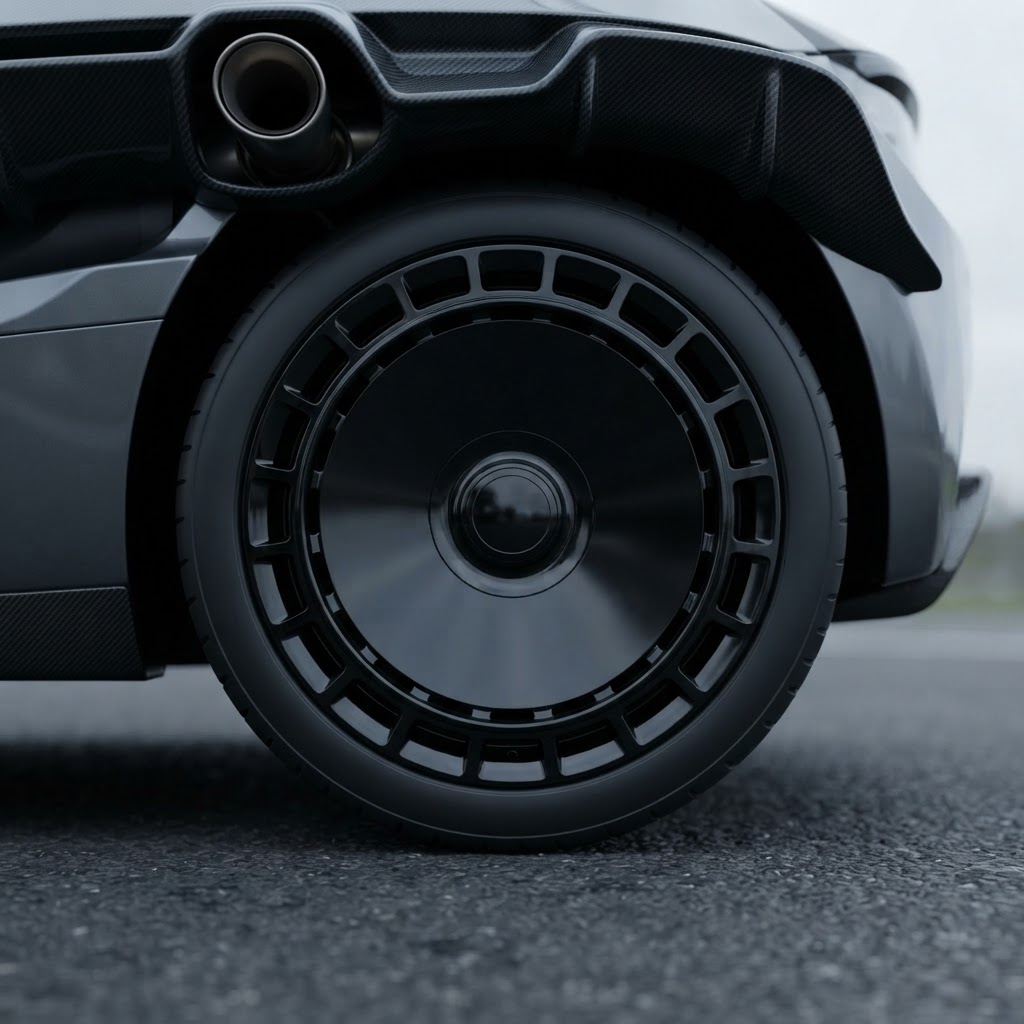
Do Wider Wheels Actually Give You More Grip?
A wider wheel doesn't create grip on its own, and the contact patch doesn't grow the way you think. Here's what genuinely changes.
Grip comes from the tire
Start here, because it settles most of the argument: the contact patch carries the car, and the tire is what touches the road. A wheel is a support structure. A wider wheel doesn't grip better on its own. It lets you run a wider tire with a better-supported sidewall, and that's where any real gain comes from.
If you fit a wider wheel and keep the same tire, you've changed nothing about grip and added weight.
What changing width actually does to the contact patch
Contrary to a very persistent myth, contact patch area is set mainly by vehicle load and tire pressure, not by tire width. Going wider doesn't give you more total area. It changes the shape of it: wider and shorter, rather than narrower and longer. Shorter in the direction of travel means less heat build-up per millimetre of tread and a slightly crisper response to steering input.
That shape change is why wide tires work well on track and why they're fussier on a wet road.
Where wider genuinely helps
- Rear traction on high-power cars. A 305 rear tire puts down torque that a 275 will spin. This is the clearest, most measurable benefit.
- Heat management on track. A wider tire spreads the same work over more rubber, so it takes longer to overheat and lasts longer in a session.
- Turn-in and mid-corner stability, when the tire is properly supported by the rim and the sidewall isn't rolling over.
- Braking, to a point, because there's more rubber to share the load.
Where it costs you
- Mass. Wider wheels and tires are heavier, and that weight sits at the worst place on the car.
- Aquaplaning. A wider tire has to clear more water per second. If you drive in real rain, this is not a theoretical drawback.
- Tramlining. Wide, stiff tires follow grooves and cambers. It's a characteristic, not a defect, but you'll feel it.
- Cost and choice. Tires get more expensive and less available as they get wider.
- Clearance. Inner clearance to the strut, the liner and the brake hardware all get tighter.
The mistake that kills grip
Over-tiring a narrow rim. Put a 295 on a 9-inch wheel and the sidewall bulges outward, the tread crown lifts, and the tire runs on a smaller effective patch with more flex. You paid for width and got wobble.
Rough guide: match the wheel width to the tire's measuring rim width. A 275 typically measures on a 9.5 to 10 inch rim. A 305 wants 10.5 to 11.5. Move one step either side of that and you're in stretch or bulge territory, both of which trade grip for looks.
Which matters more: width or compound?
Compound, by a wide margin. A proper performance tire in the factory width will out-grip a hard budget tire in a size two steps wider, in every condition, on every surface. If you can only change one thing, change the tire.
Camber is next. A car with 2 degrees more negative camber on the front will find more cornering grip than one with 20 mm more tire width and a factory alignment.
So what's the right answer
Go one size wider than stock if the car has the power to use it, the clearance to fit it, and you're pairing it with a tire designed for the job. Then leave it alone. Chasing the widest possible fit usually ends in a car that's slower, heavier and worse in the rain than the one you started with.
Tell us how you drive and we'll size the wheel around the tire, not the other way around. Start a quote.
Tell us your vehicle and we'll engineer the perfect fitment.
Request a Quote