Replica Wheels and Fake Forged: How to Tell Before You Buy
A replica and a fake forged wheel are two different risks. Here's how to tell them apart with a scale, a torch and five minutes.
First, the distinction that matters
A replica wheel copies a well-known design. That's not automatically unsafe, but it tells you something: the company selling it spent its money on the look, not on the engineering behind it. A fake forged wheel goes further and claims a manufacturing process it doesn't have.
Those are different problems. One is a budget cast wheel. The other is a lie about strength, and that's the one that gets people hurt.
Why forged and cast behave differently
A forged wheel starts as a solid billet or a pressed forging. The metal's internal grain follows the shape of the part, which makes it dense and predictable. A cast wheel is poured, then heat treated. It's cheaper, and it's more brittle: hit a pothole hard enough and a cast wheel tends to crack, while a forged wheel usually bends, and a bend can often be repaired.
Flow-formed wheels sit in between and are genuinely good. The problem is when someone calls a flow-formed wheel "forged" to charge forged money. Different process, different price, different strength.
Six ways to tell before you pay
1. Weigh it. A 20x10 one-piece forged wheel typically lands somewhere around 20 to 24 pounds. A cast replica in the same size is often 28 to 33. If a seller claims forged and the wheel weighs like cast, believe the scale, not the listing.
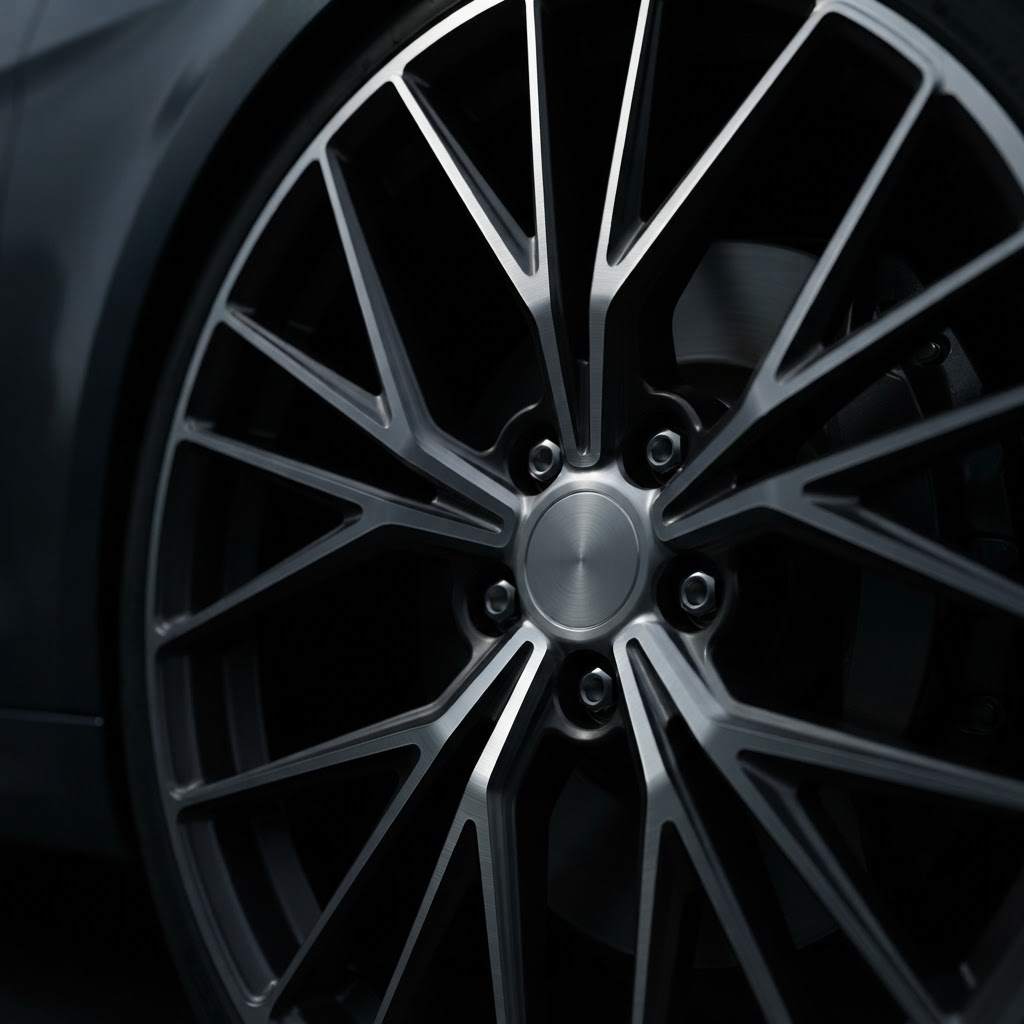
2. Look at the machining. Forged wheels are cut from solid stock, so you see continuous, clean tool marks and sharp, crisp window edges. Cast wheels come out of a mould, so they have draft angles, softer edges, and a rougher inner barrel.
3. Find the markings. Genuine wheels carry test and compliance marks: JWL and VIA from Japan, TUV from Germany, SAE J2530 in the US market. They also have an engraved load rating and production date. Replicas tend to have stickers, or nothing at all.
4. Check the load rating in writing. A real manufacturer publishes a per-wheel figure, because they tested it. If you ask and get a vague answer, you have your answer.
5. Check the weight and the warranty together. A company offering a lifetime structural warranty on a wheel that costs less than the shipping has not modelled the failure case.
6. Look at the geometry, not just the shape. Copies often capture the silhouette and lose the spoke cross-section. That's where stress concentrates. A spoke that looks identical from ten feet away can have half the material at its root.
The failure mode nobody plans for
When a wheel fails, the conversation after the crash is about what was on the car. If the wheel's load rating doesn't match the vehicle, or the part was never tested to any published standard, that becomes your liability, and an insurer can treat a non-compliant part as a reason to reduce or deny a claim.
There's also a market for counterfeit versions of real brands: the same visual design, sold at a third of the price, with none of the testing. If the price is impossible, the wheel is too.
What we'd tell a friend
A well-made cast wheel from a brand with published testing is safer than a fake forged wheel with a nice website. Buy the process and the paperwork, not the adjective. And if you're going to spend real money, spend it on a manufacturer who will tell you the weight, the load rating and the test standard without being asked twice.
Every set we build is forged 6061-T6, machined to your vehicle's hub bore, and covered by a lifetime structural warranty. See the range.
Tell us your vehicle and we'll engineer the perfect fitment.
Request a Quote